
“Guardian of the child’s best interests, or merely a procedural safeguard?” This question was at the heart of two expert round tables organized by FORUM in April 2026 as part of the VOICE project – Be Seen, Be Heard: Empowering Child VOICEs in Legal Proceedings. The first took place on 9 April in Prague, the second on 23 April in Bratislava. Both meetings brought together experts from the fields of justice, legal practice, social work, public administration, academia, and civil society, with the aim of discussing how to ensure that procedural representation of children effectively supports their right to be heard and to participate actively in judicial proceedings.
The central theme of both round tables was the tension between the traditional concept of the “best interests of the child” – often interpreted in a paternalistic way in practice – and a rights-based approach that views the child as a rights holder whose views must be duly taken into account in proceedings. In this understanding, the guardian ad litem is not a substitute decision-maker, but a person who provides the child with necessary procedural support and creates conditions for their effective participation in the proceedings.
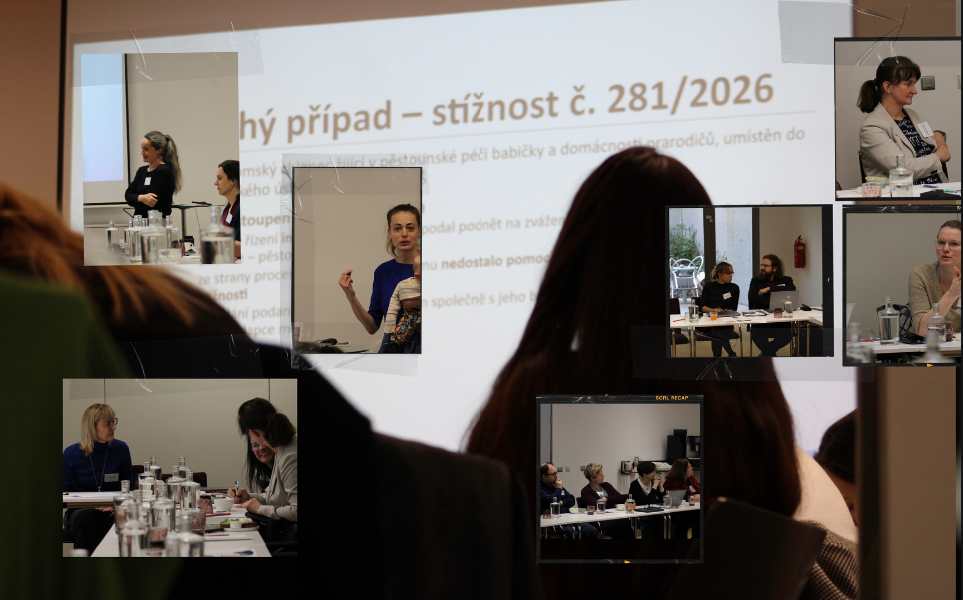
Prague, Hotel Josef | 9 April 2026
The Prague round table focused on a critical analysis of the current practice of procedural guardianship for children in the Czech legal environment, including the position of children in migration situations and children with disabilities.
Critique of the current practice of guardianship: A representative of Forum for Human Rights (FORUM) presented the role of the Child Social and Legal Protection Authority (OSPOD) as a procedural guardian through the lens of international standards, using two complaints submitted by FORUM to the UN Committee on the Rights of the Child. She showed how guardianship can become a “source of powerlessness” – for example when a guardian files an appeal in a case concerning the placement of siblings in institutional care without their consent. The following presentaiton placed the issue in the context of Czech constitutional case law and outlining possible solutions. The discussants agreed that the guardian should represent a form of procedural support that helps balance the impacts of the child’s vulnerability and enables them to effectively exercise their procedural rights, rather than replacing their voice with the guardian’s own expert judgment.
View of the Office of the Children’s Ombudsman: A representative of the Office of the Public Defender of Rights addressed possibilities for strengthening procedural safeguards, in particular through consistent informing of children about the course of proceedings and their outcomes. The need was expressed to shift decision-making from a model in which decisions are made “about” the child to a model in which decisions are made “with” the child. This change should also include greater specialization of child social and legal protection authorities and more consistent consultation with the child before significant procedural acts.
Inclusive and restorative approaches: A representative of the Society for the Support of People with Intellectual Disabilities in the Czech Republic presented the concept of “justice facilitators” for children with psychosocial or intellectual disabilities – independent professionals who adapt communication to the child’s needs in line with Article 13 of the Convention on the Rights of Persons with Disabilities (CRPD). A representative of RK centrum then presented the model of Family Group Conferences, which returns decision-making competences to the child and their natural support network and offers an alternative to the paternalistic understanding of poverty as individual parental failure.
Children as victims of human trafficking: A representative of the organization La Strada pointed out that the current system of protection for victims of human trafficking is primarily designed for adults and lacks specific mechanisms for children and adolescents – for example the possibility of using confidential or safe accommodation – and called for faster appointment of legal representatives.
The discussion made clear that this is a complex issue with far-reaching implications for the protection of children’s rights in vulnerable situations. Arguments were raised for and against separating procedural representation of the child from the agenda of social and legal protection carried out by OSPOD, while participants agreed that individual assessment of the child should shift from expert reports “about the child” to participatory processes that enable the child to genuinely exercise their procedural rights.

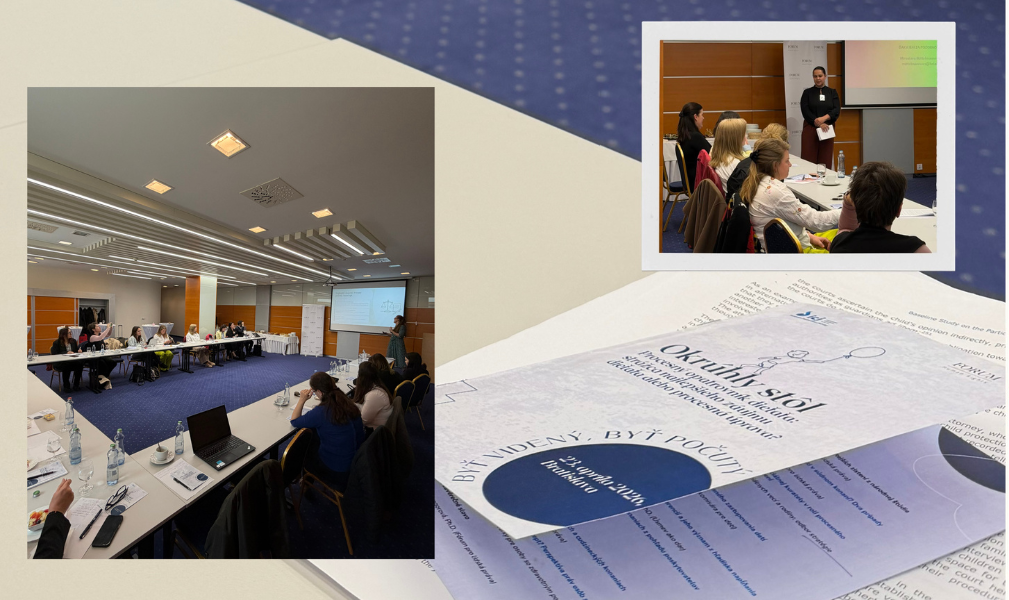
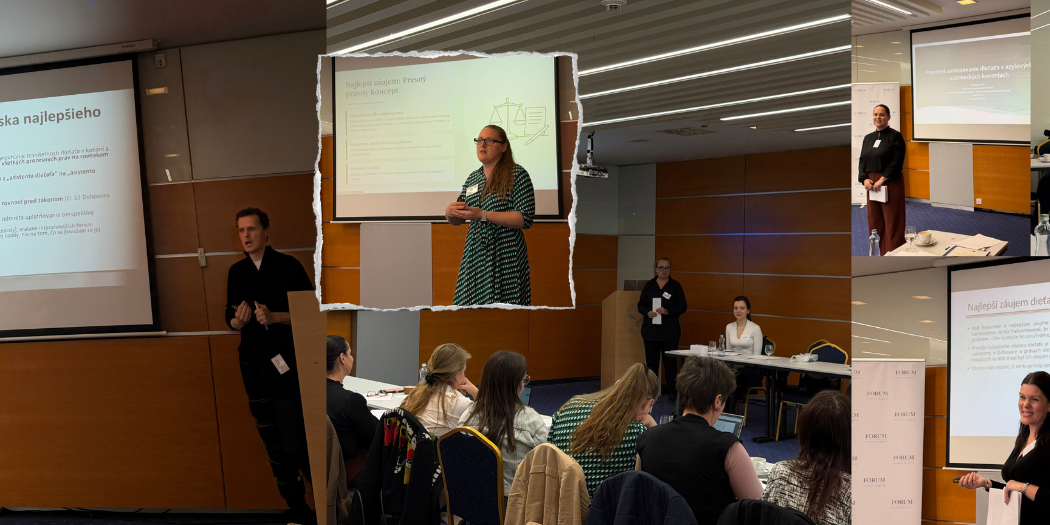
Bratislava, Hotel Tatra | 23 April 2026
Two weeks later, we addressed the same topic in Bratislava, this time with invited Slovak experts who developed the discussion in the context of the Slovak legal environment.
International standards and children’s rights: A representative of Forum for Human Rights followed up on the Prague presentation of complaints submitted to the UN Committee on the Rights of the Child. A representative of the Office of the Children’s Commissioner added a practical view of the application of the best interests principle, which should function as a procedural rule requiring a consistent legal justification of decisions and a transparent explanation of how the child’s subjective rights were taken into account.
Systemic challenges of child social and legal protection: A representative of the organization Tenenet explained how children perceive judicial proceedings as an environment that feels foreign to them, in which they do not feel heard and often feel sidelined. A representative of the Ministry of Labour, Social Affairs and Family of the Slovak Republic critically reflected on the systemic limits of the current model of child social and legal protection authorities and social guardianship, which simultaneously performs the role of administrative authority, petitioner, and procedural guardian of the child — a ‘triple role’ — leading to a conflict of interest and weakening trust in the independence of representation.
Inclusive approach to children with disabilities and in migration: A representative of the Office of the Commissioner for Persons with Disabilities emphasized the need for individual procedural adjustments for children with disabilities in line with the CRPD. A representative of the League for Human Rights pointed out the specific barriers faced by children in migration situations and the need for specialized legal protection mechanisms taking into account their safety, language, and communication needs. Both presentations emphasized that the role of the guardian should not be limited to legal representation, but should also include actively removing barriers that prevent full participation in judicial proceedings.
Restorative practice: A representative of Úsmev ako dar presented the model of Family Group Conferences, which returns decision-making competences to the child and their natural support network instead of concentrating them in the hands of professionals. This restorative approach is based on the assumption that every family has its own resources and capacities that can be used in finding solutions and building a safe environment for the child, strengthening responsibility, and preserving family ties.
Participants agreed that the current Slovak practice, in which child social and legal protection authorities and social guardianship simultaneously act as protection authority, procedural guardian, and proposer of intrusive measures (such as institutional care or interventions into parental rights), is unsustainable and in conflict with Slovakia’s international obligations, including the UN Convention on the Rights of the Child. The discussion confirmed the urgent need for systemic reform that would assign the function of procedural guardian to an independent body, especially in cases where the authority itself is the proposer of proceedings.
Joint conclusions
Although both round tables focused on different legal environments, their conclusions were in many respects similar. Participants agreed that the protection of children’s rights cannot rest solely on reference to the child’s best interests. Equally important is the creation of procedural conditions that enable children to understand proceedings, express their views, and participate in decision-making in a manner appropriate to their age, maturity, and individual needs.
The discussions also highlighted the need to strengthen the independence of procedural representation of children, develop multidisciplinary cooperation, and seek systemic solutions that respect children as full rights holders. The ability to combine protection of the child’s best interests with the child’s right to be heard represents one of the greatest challenges of contemporary family and guardianship law.

The VOICE project is co-funded by the European Union. Views and opinions expressed are, however, those of the author(s) only and do not necessarily reflect those of the European Union or the European Commission. Neither the European Union nor the granting authority can be held responsible for them.
As part of the project, a baseline study (in English) was also produced mapping the participation of children in legal and judicial proceedings across five EU member states. The study is freely available for download and use.
