
FORUM is a project partner in the new project Fundamental rights, Litigation, Awareness Raising and Equality (FLARE), which will run for 24 months (from October 2025 to September 2027). The project follows an innovative approach by aiming to both strengthen the knowledge and ability of CSOs and legal practitioners and enhance their engagement in strategic litigation related to the fundamental rights of the Roma in Romania and the Czech Republic.
FLARE utilizes also an innovative dual approach by mainstreaming a gender perspective while also implementing specific measures to eliminate, prevent, and address gender inequality. Intersectionality factors such as age (with a focus on youth), disability, and LGBTQI+ identity are also considered across all project activities to ensure equitable participation and representation. The project aligns with key European policy frameworks, including the European Democracy Action Plan, the EU Roma Strategic Framework 2020–2030, the EU Strategy to Strengthen the Application of the Charter of Fundamental Rights. It also contributes to the EU Gender Equality Strategy 2020–2025, the Istanbul Convention, and the EU Charter of Fundamental Rights (Art 21 on ‘Non-discrimination’ and Art 23 ‘Equality between women and men’).
Project Objectives
The overall objective of FLARE is to enhance awareness about the application of the EU Charter in strategic litigation related to the fundamental rights of the Roma, and to increase their access to justicein the Czech Republic and Romania by building the capacity of CSOs and legal practitioners and by fostering cooperation among them.
Particularly, this project aims to enhance awareness about the application of the EU Charter in strategic litigation related to the fundamental rights of the Roma, by:
- strengthening the knowledge and enhancing the capacities of CSOs and legal practitioners,
- enhancing their engagement in strategic litigation related to the fundamental rights of the Roma,
- and raising awareness of the Roma about their fundamental rights and the available legal remedies in the Czech Republic and Romania.
Main Activities
Our work over the next two years is action-oriented and will directly build the skills and resources needed to drive legal and social change:
- A series of action-oriented, participatory, learner-centred and dialogue-oriented trainings for Roma-led and pro Roma CSOs and legal professionals about the application of the EU Charter in strategic litigation related to the fundamental rights of the Roma.
- A study visit for CSOs and legal practitioners to the Court of Justice of the EU to learn about its role, function and work.
- Mentoring for CSOs for strategic cases addressing violations of the fundamental rights of the Roma.
- A practical strategic litigation guide for CSOs on how to effectively build successful legal cases and initiate and conduct strategic litigation concerning the fundamental rights of the Roma.
- A freely accessible online legal database comprising of strategic cases related to the fundamental rights of Roma in the Czech Republic and Romania.
- An extensive awareness raising campaign for Roma about their fundamental rights and the available legal remedies.
- A closing conference with the participation of representatives of the national equality bodies, Ombudsperson’s Office, legal practitioners and CSOs to present the results of the project, exchange experience and learn about best practices that could be adjusted and applied in other European contexts.
Context and Relevance
While strategic litigation has demonstrated its successful impact on Roma rights, as shown by the work of large, experienced NGOs, there is a critical gap in knowledge and capacity. For instance, out of the several examples for strategic litigation involving the Roma community in Europe, FORUM has been involved in dozens of cases, including the ERRC v Czech Republic, Collective Complaint 220/2022 (for failure to provide equal access to pre-school education) and the ERRC v Czech Republic, Collective Complaint 190/2020 (discrimination, children in care).
The FLARE project directly responds to documented challenges faced by Roma communities and legal professionals in both the Czech Republic (CZ) and Romania (RO). Therefore, the proposed Action was developed based on three main considerations:
- A lack of awareness of the EU Charter in target countries.
- The successful impact strategic litigation has on the rights of the Roma.
- The need to enhance strategic litigators’ capacities, visibility, and cooperation to streamline the use and implementation of the EU’s human rights legal framework.
Project Events
1. Kick-off Meeting (Budapest | November 2025)
The kick-off meeting took place on November 6, 2025, in Budapest, where we met with our partners to discuss in detail project’s goals, plans, and next steps. It was inspiring to see such strong commitment from all partners and enthusiasm for our common objective.

2. Strategic litigation for the rights of Roma communities (Brno | May 2026)
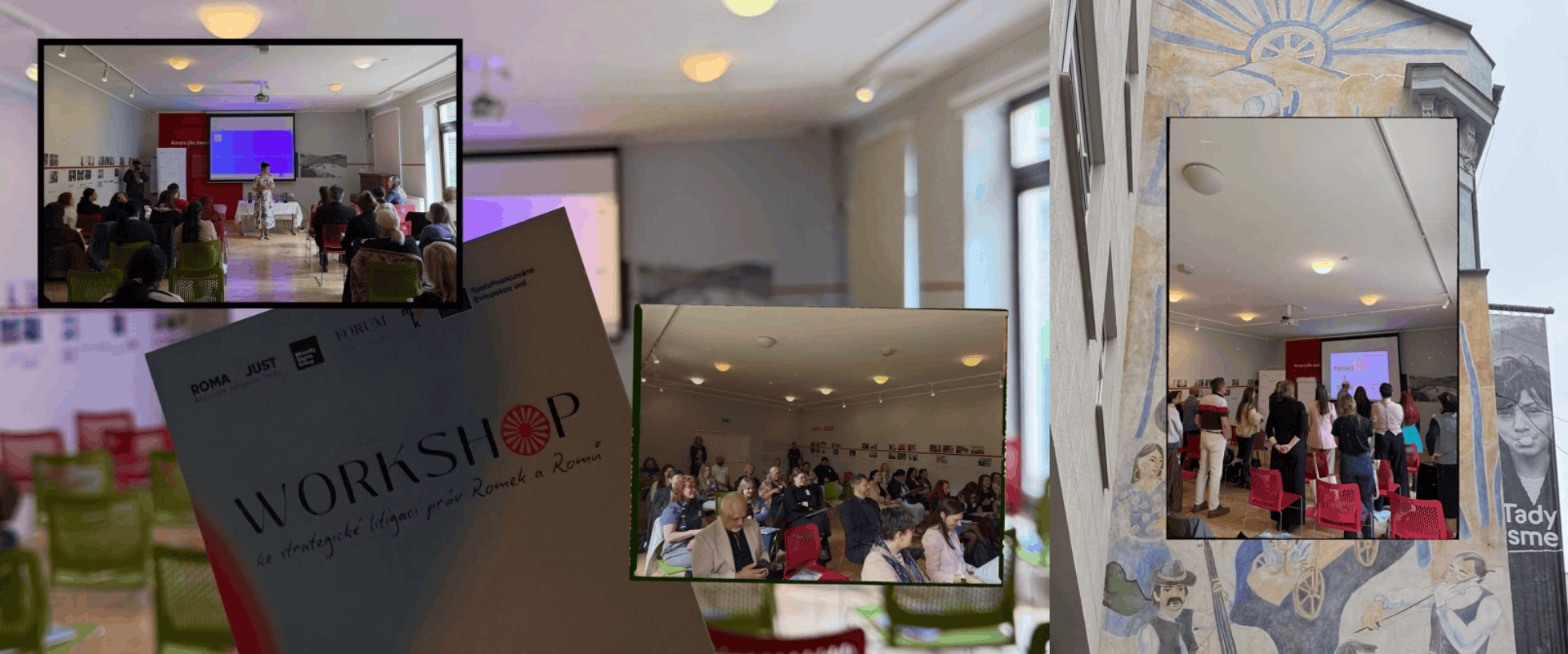
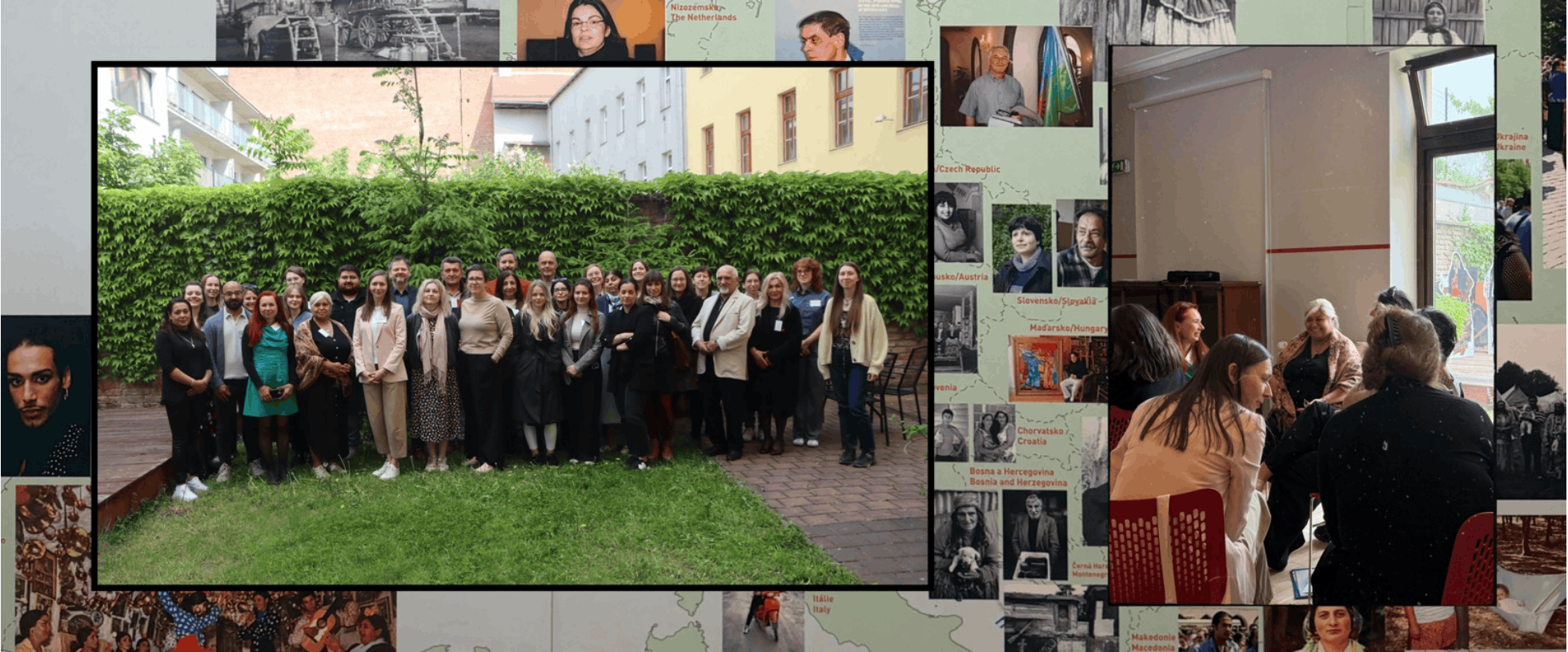
On 14–15 May 2026, Forum for Human Rights organized a two-day workshop in Brno dedicated to strategic litigation for the rights of Roma communities, held under the auspices of the Government Commissioner for Roma Minority Affairs. Held just ahead of Roma Resistance Day (16 May), the event brought together more than 37 professionals—including legal practitioners, civil society representatives, state officials, and community activists from Czechia and Slovakia—to strengthen cross-sectoral collaboration and bridge the gap between courtroom litigation and ground-level community action.
The workshop examined key systemic challenges and themes across its sessions: access to drinking water and the right to health; reproductive rights of Roma women; desegregation in education; police violence and the barriers to independent investigation; tools of activism and the involvement of Roma youth; and collective complaints before the European Committee of Social Rights. Significant attention was dedicated to mainstreaming a gender perspective into discussions about strategic litigation—from case selection and legal arguments to working with evidence and designing meaningful remedies. Beyond new knowledge and contacts, the workshop served as a vital reminder that strategic litigation is not an end in itself. It is one tool for driving systemic change, fulfilling its transformative potential only when deeply rooted in the knowledge, experiences, and agency of Roma communities themselves. What resonated most strongly was the persistent courage of individuals who choose to challenge discrimination through the courts. Legal proceedings are often lengthy and costly, discrimination is hard to prove, institutions frequently resist, and remedies are often insufficient to address the root causes of inequality or compel change; yet thanks to those who decide to defend their rights, precedent-setting decisions are born with impacts far beyond individual cases.
More here.
Project Partners
- Minority Rights Group Europe (MRGE), Project coordinator – Hungary
- Asociatia Juristilor Romi RomaJust (RomaJust) – Romania

Full name of the project
Fundamental rights, Litigation, Awareness Raising and Equality (FLARE) CERV-2024-CHAR-LITI-LITIGATION

This project is co-funded by the European Union. Views and opinions expressed are, however, those of the author(s) only and do not necessarily reflect those of the European Union or the European Commission. Neither the European Union nor the granting authority can be held responsible for them.