
From January 2025 to December 2026, FORUM, together with its partners, is implementing project Be Seen, Be Heard – Empowering Child VOICEs in Legal Proceedings (VOICE). This initiative aims to ensure active and meaningful participation of children in legal proceedings, aligning with Article 12 of the UN Convention on the Rights of the Child (UNCRC), the EU Strategy on the Rights of the Child, and other international and EU legal standards. Despite these comprehensive frameworks, the actual realization of the right to be heard remains inconsistent across the European Union. To address this gap, the project focuses on promoting child-sensitive approaches, provide training, and advocate for systemic changes that ensure the effective realization of children’s right to be heard and participate meaningfully in judicial systems across the EU, particularly by targeting legal professionals and other stakeholders.
Objectives
- Enhance capacity among legal professionals on children’s rights, with a focus on children facing vulnerabilities.
- Facilitate the exchange of best practices and collaboration among practitioners in the five target EU countries.
- Raise awareness about the importance of a child-centric approach in legal proceedings and children’s right to be heard and participate.
Project Beneficiaries
- Primary beneficiaries: justice professionals, lawyers, judges, prosecutors, social workers, probation officers, and national authorities.
- Ultimate beneficiaries:children, particularly those in vulnerable situations, such as:
- Children in alternative care
- Refugee and migrant children
- Children with disabilities
- Children experiencing poverty and social exclusion
Main Activities
- Kick-off Meetings: Two online meetings to establish project management strategies and coordination.
- Project Management Group (PMG) Meetings: Regular online meetings to monitor progress, address challenges, and ensure coordination.
- Baseline Study: Methodology development and analysis to identify existing gaps in children’s participation rights.
- Monitoring and Evaluation: Implementation of a tailored Monitoring, Evaluation, and Learning (MEL) plan.
- Close-out Meeting: A final online meeting to evaluate project outcomes, discuss challenges, and explore future opportunities.
For download
1. Baseline Study
This study examines the participation of children in legal and judicial proceedings across five EU member states. It examines how the right of the child to be heard and to participate in proceedings is implemented in law and in practice, in line with Article 12 of the UN Convention on the Rights of the Child, Article 24 of the EU Charter of Fundamental Rights, and the EU Strategy on the Rights of the Child.
The study analyses national legal frameworks and practice on the basis of interviews with legal experts, justice professionals, child representatives and, where possible, children themselves. Although legal provisions in all of the countries examined recognise the child’s right to participate in proceedings, the research points to persistent gaps between the legal framework and its application in practice. The report identifies recurring problems, such as unequal levels of protection across different areas of law, a lack of child-friendly procedures, and limited professional training, particularly in relation to children with disabilities and migrant children. The study provides a foundation for further activities of the VOICE project aimed at strengthening the effective participation of children in legal proceedings in line with international and European standards.
2. Compedium
The Compendium “Ensuring the child’s right to be heard and to participate in legal proceedings: Strategies and good practices” is intended for professionals, policymakers, and civil society actors involved in or concerned with legal proceedings affecting children. It serves as a comprehensive overview of guiding principles and procedural rights in international human rights law and standards ensuring children’s rights in legal proceedings. By fostering the exchange of information, strategies, and good practices among professionals from different legal fields, such as criminal, asylum and migration-related, as well as custody, care and child protection proceedings, the Compendium aims to contribute to more child-sensitive legal systems.
Educational Videos
As part of the VOICE project, we have produced, together with our project partners, two short animated videos that explain children’s procedural rights and opportunities to participate in judicial and administrative proceedings in an accessible, child-friendly format.
These audio-visual materials directly build on the project’s Compendium of Strategies and Good Practices, adapting complex legal standards into clear tools designed for children and young people. An important part of the project is communication that not only informs children but also supports their active participation and empowers them as rights-holders. The videos aim to help children and young people understand their rights, feel confident in expressing their views, and know where they can turn for support.
The two videos have been produced and translated into four project languages for wider reach, and are available below in English, Czech, and Slovak.
VIDEO 1: Access to and role of the guardian ad litem in custody, care, and child protection proceedings
For children and young people experiencing custody proceedings, parental separation, or decisions regarding alternative care.
The video explains what a guardian ad litem is, how they support a child throughout the proceedings, and what information children are entitled to receive. It also highlights children’s right to share their views and feelings, as well as the support available if they are unhappy with the outcome or the way they have been treated.
🇬🇧 English version:
🇨🇿 Czech version:
🇸🇰 Slovak version:
VIDEO 2: Right to a fair hearing for child victims and witnesses in criminal proceedings
For children and young people who have been victims of crime or witnessed violence and abuse.
The video introduces children to their rights when being interviewed by the police or heard in court: the right to tell their story, to receive clear and accessible information, and to be heard in a safe environment—including the option to have a trusted person present or to take a break whenever needed.
🇬🇧 English version:
🇨🇿 Czech version:
🇸🇰 Slovak version:
Project Events
1. Transnational exchange workshop on child-friendly justice and procedural rights
🗓️ 13–14 May 2025 | Brussels

On 13–14 May 2025, the International Commission of Jurists (ICJ) held a workshop on child-friendly justice and procedural rights. Experts and practitioners from the Czech Republic, Slovakia, Malta, Austria and the Netherlands focused on how international and EU legal frameworks protect the best interests of the child and the child’s right to be heard in legal proceedings and how these rights are implemented in practice.
Over two days, participants explored models of child representation and procedural safeguards that ensure children’s views are genuinely considered in decisions concerning children’s rights.
“Children can express themselves in many different ways, and it is crucial that we talk to them and to explain things to them, even when they are very young,”
said Martine Comte, ICJ Commissioner, former Judge.
Participants identified as a critical issue that children’s views are often only superficially considered – especially when the child is perceived as “difficult” or “problematic.” They stressed that hearing a child must not be a mere formality, but must serve as a meaningful process that genuinely influences the outcome. Promising practices included child-friendly judgments and family group conferencing. As some participants noted, seemingly minor elements – such as a child’s attachment to a pet or regular contact with friends – may carry deep emotional weight for children and can be central to the child’s sense of stability and well-being, for instance when taken away from the family.
Discussions also centred around the dual role of child protection authorities and the lack of independence in children’s representation. Participants from the Czech Republic and Slovakia shared concerns that the same authority both initiates the proceedings and represents the child, raising questions about impartiality.
“The role of the representative of the child in legal proceedings is crucial for the child’s access to justice,”
said Karolína Babická, ICJ Senior Legal Adviser.
“It is not the role of the representative to assess the child’s best interests, but rather to ensure the child’s right to be heard. Lack of clarity regarding the role of a representative of a child in proceedings may lead to a violation of their fair trial rights,”
Karolína Babická added.
The workshop, bringing together a wide range of professionals from various fields, succeeded in bridging civil, administrative, and criminal law and contributed to a more integrated approach to child-centred legal proceedings.
2. Webinar on the crucial role of the representative and the child’s right to be heard in legal proceedings
🗓️ 18 June 2025 | Online
On 18 June 2025, a follow-up webinar on the crucial role of the child’s representative and the child’s right to be heard in legal proceedings took place, offering an opportunity for continued exchange. The event brought together leading experts from across Europe to discuss how international and EU legal frameworks ensure the best interests of the child.
Among the main speakers was Anna Sležková, our lawyer, who presented the significance of the case B.J. and P.J. v. Czech Republic under the UN Convention on the Rights of the Child, as well as the child’s right to be heard under EU law. Other speakers included Nuala Mole, senior lawyer and founder of The AIRE Centre, and Laura Stelzer, legal and policy officer at DG JUST European Commission.
The webinar provided participants with a deeper understanding of how EU legal frameworks and international law protect children’s rights in legal proceedings and what challenges still persist in practice. Specific case law examples and recommendations for improving practice in Member States were discussed.
3. Transnational exchange workshop on procedural rights of migrant and refugee children in legal proceedings
🗓️ 16-17 September 2025 | Brussels
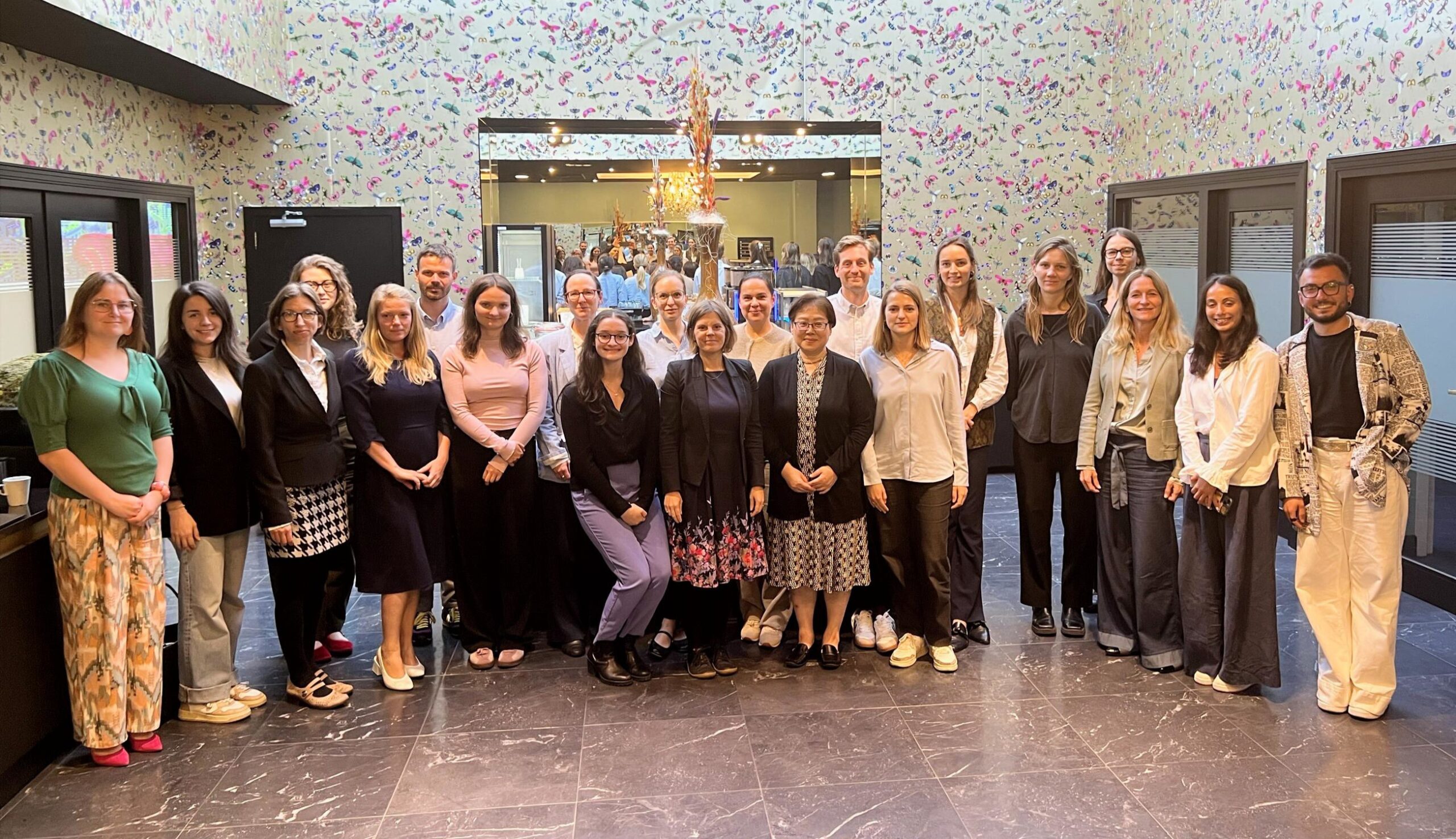
On 16-17 September 2025, the International Commission of Jurists (ICJ) hosted a transnational workshop in Brussels on procedural rights of migrant and refugee children in legal proceedings. The event brought together lawyers, judges, and national authorities from Austria, the Czech Republic, the Netherlands, Malta, and Slovakia.
“Even where national courts are reluctant to refer to international law and case-law, lawyers should actively invoke the interpretations of UN Treaty Bodies in domestic litigation,”
said Mikiko Otani, ICJ Commissioner and former Chair of the UN Committee on the Rights of the Child.
The workshop discussed access to a guardian by unaccompanied minors, as a central safeguard ensuring children’s best interests and the right to be heard throughout proceedings. Challenges discussed included the question of independence of guardians, high caseloads, and the lack of effective complaint mechanisms. The EU Pact on Migration and Asylum, set to be implemented at national level from July 2026, introduces severalprovisions related to guardianship, such as the use of temporary representatives, specificchild-to-guardian ratios, and minimum qualification requirements left to national interpretation.
The EU Pact will significantly lower the existing procedural safeguards on legal aid across the EU. It will no longer be required to provide free legal assistance at the first stage of the asylum determination proceedings, but only at the appeals stage. This raises significant concern, as the provisions appear to be inconsistent with international human rights law andstandards. EU Member States have the possibility to provide for higher standards than those foreseen in the EU Pact and should guarantee free legal counselling and representation from the start of the proceedings.
4. Webinar on procedural rights of migrant and refugee children
🗓️ 7 October 2025 | Online
On 7 October 2025, the ICJ organized a follow-up webinar on procedural rights of migrant and refugee children in legal proceedings, offering an opportunity for continued exchange following the September workshop in Brussels.
The findings and recommendations from this workshop will feed into a forthcoming report aimed at providing strategies and good practices ensuring the child’s right to be heard in legal proceedings.
5. Transnational exchange workshop on inclusive considerations for children with disabilities in legal proceedings
🗓️ 13.-14. November 2025 | Brussels

On 13–14 November 2025, the International Commission of Jurists (ICJ) organized a workshop in Brussels on the right of children with disabilities to participate effectively in legal proceedings. Experts and legal practitioners from Austria, the Czech Republic, Malta, the Netherlands and Slovakia exchanged good practices and strategies for ensuring access to justice for children with disabilities, in particular those with intellectual and psycho-social disabilities.
The workshop explored international and EU legal standards that require States to ensure access to justice for children with disabilities, including the right to be heard and to participate in criminal, civil, and administrative proceedings.
“Although all EU Member States, and the EU itself, have ratified the UN Convention on the Rights of Persons with Disabilities, and must comply with it and interpret legislation in line with it, practical implementation remains far behind these obligations,”
said Karolína Babická, Senior Legal Adviser of the ICJ.
“State authorities and justice actors must ensure that procedural accommodations are made available in each individual case. Without them children with disabilities face discrimination in justice systems,”
she added.
Participants identified several common challenges in ensuring access to justice for children with disabilities across different EU countries represented. These included restrictions on legal capacity in proceedings, limited use of child-friendly language and easy-to-read formats, low awareness of and identification of children with disabilities, and the lack of specific, mandatory and continuous training for judges and other justice professionals.
The diverse group of judges and lawyers working with NGOs, law firms and Ombudsperson offices for children and persons with disabilities contributed examples of good practices for adequate procedural accommodations that support effective participation. These included accessible and adapted courtroom settings and the availability of specialized professionals, such as intermediaries and support persons. Participants also emphasized the need for stronger interdisciplinary collaboration among teachers, lawyers, social workers, guardians, police officers, judges, interpreters, and psychologists, to identify and support the special needs of children with disabilities. They further underscored the need to make national remedies both more accessible and more effective.
6. Webinar on the participation of children with disabilities in legal proceedings
🗓️ 14. January 2026 | Online
On 14 January 2025, an online webinar was held by the International Commission of Jurists (ICJ) in partnership with other #VOICE project partners, focusing on inclusive and child-sensitive approaches that ensure children with disabilities are heard and actively participate in legal proceedings. The webinar provided an overview of the international and EU legal frameworks that ensure the right of these children to be heard.
7. National round tables on the child’s guardian ad litem: guardian of best interests, or procedural accommodation?
🗓️ 9 & 23 April 2026 | Prague & Bratislava

In April 2026, Forum for Human Rights organized two expert round tables — on 9 April in Prague and on 23 April in Bratislava — examining the role of the child’s guardian ad litem in the Czech and Slovak legal systems. Bringing together justice professionals, social workers, academics, and civil society representatives, the discussions addressed the tension between the traditional “best interests of the child” paradigm — often applied paternalistically — and a rights-based approach that treats the child as a rights holder and an active participant in proceedings, rather than a mere object of care or protection.
Participants examined critical issues including the conflict-of-interest risks arising when child protection authorities (OSPOD) simultaneously act as administrative body, petitioner, and procedural guardian; the need for procedural accommodations for children with disabilities under the CRPD; restorative alternatives such as Family Group Conferences; and the specific vulnerabilities of migrant children and child victims of trafficking. Both round tables concluded that protecting children’s rights requires more than reference to their best interests alone, but genuine procedural conditions enabling children to understand proceedings, be heard, and participate effectively in decisions that affect them.
Project Partners
- International Commission of Jurists (Belgium)– Project Coordinator
- Nederlands Juristen Comite Voor Demensenrechten (Netherlands)
- Aditus Foundation (Malta)
- ICJ Austria (Austria)
Full name of the project
Be Seen, Be Heard – Empowering Child VOICEs in Legal Proceedings (VOICE) CERV-2024-CHILD

This project is co-funded by the European Union. Views and opinions expressed are, however, those of the author(s) only and do not necessarily reflect those of the European Union or the European Commission. Neither the European Union nor the granting authority can be held responsible for them.