
Between September 2024 and August 2026, FORUM together with partners is implementing the two-year-long project Access to Justice for Children Accused and Suspect in Criminal Proceedings (ACCESS). The project seeks to foster EU-wide effective and non-discriminatory access to justice for children in criminal proceedings, and respect for children’s procedural rights amongst legal and other justice professionals. By identifying gaps in children’s access to procedural rights through peer-exchange among justice professionals, the consortium of partners will foster effective application of the Directive 2016/800 of the European Parliament and of the Council of 11 May 2016 on procedural safeguards for children who are suspects or accused persons in criminal proceedings.

Project objectives
The project’s main objective is to facilitate effective and non-discriminatory access to justice for children suspect and accused in criminal proceedings in the target countries by:
- exchanging good practices and increasing knowledge and practical expertise of Directive 2016/800, in light of the UN Convention on the Rights of the Child principles, among lawyers, judges, prosecutors, law enforcement personnel, experts from civil society organisations, social workers, and probation officers from the Czech Republic, Slovakia, Bulgaria, Poland, Belgium, and the Netherlands;
- enhancing mutual learning and trans-professional cooperation among competent national authorities, NHRIs, equality bodies and legal and other professionals in the six target EU countries.
The project’s final beneficiaries are children in conflict with the law, including potentially vulnerable or marginalized groups, such as children with disabilities, children belonging to minority groups, such as Roma children or children in migration, children facing poverty, and transgender children.
Project activities
- an in-person exchange roundtable among lawyers, judges, prosecutors, social workers, probation officers, law enforcement personnel, and practitioners from civil society organisations;
- four online exchange workshops for 1) lawyers, 2) judges, 3) prosecutors, and 4) social workers and probation officers from the six EU Member States covered by the project;
- national seminars organized in each of the project countries;
- the publication of a Compendium of good practices for practitioners;
- the publication of a frequently asked questions (FAQ) for children, youth and parents on procedural rights of children in conflict with the law.
For download
1. Baseline studies: national analyses and summary
The baseline research comprises six national studies and a final comparative summary. It maps how procedural rights under Directive (EU) 2016/800 and other relevant international standards are applied in law and in practice across the six participating countries (Belgium, Bulgaria, Czechia, the Netherlands, Poland, and Slovakia).
The research focuses on systemic gaps and obstacles at national level, with particular attention to children facing structural disadvantage (for example due to poverty, ethnic origin, disability, or gender identity). The national studies were drafted by local partners in their national languages; the project coordinator (ICJ) then produced a comparative summary study in English.
2. Compendium of Good Practices
As part of the project, the International Commission of Jurists (ICJ) and partner organisations published Safeguarding the rights of child suspects and accused in criminal proceedings: Compendium of Good Practices, examining the procedural rights of children across six European countries — Belgium, Bulgaria, the Czech Republic, the Netherlands, Poland, and Slovakia.
The publication highlights persistent shortcomings in the implementation of procedural safeguards for children, while showcasing promising practices that can help build truly child-friendly justice systems. It focuses on key procedural guarantees, including the right to a lawyer and legal assistance, the right to information, safeguards concerning the deprivation of liberty, addressing discrimination and inequality, and the situation of children below the age of criminal responsibility.
The findings reveal that while legal frameworks are in place, their practical application remains inconsistent and often ineffective. Key obstacles include limited resources, a lack of specialized training, and structural inequalities that hinder children’s access to justice — particularly for children from disadvantaged or marginalized backgrounds.
At the same time, the Compendium demonstrates that workable solutions already exist to help overcome these barriers — such as early access to specialized legal assistance, child-friendly communication, cross-professional collaboration, and genuine alternatives to detention.
Czech and Slovak translations are currently being prepared for download.
3. Materials for children, young people and parents (FAQ and leaflets)
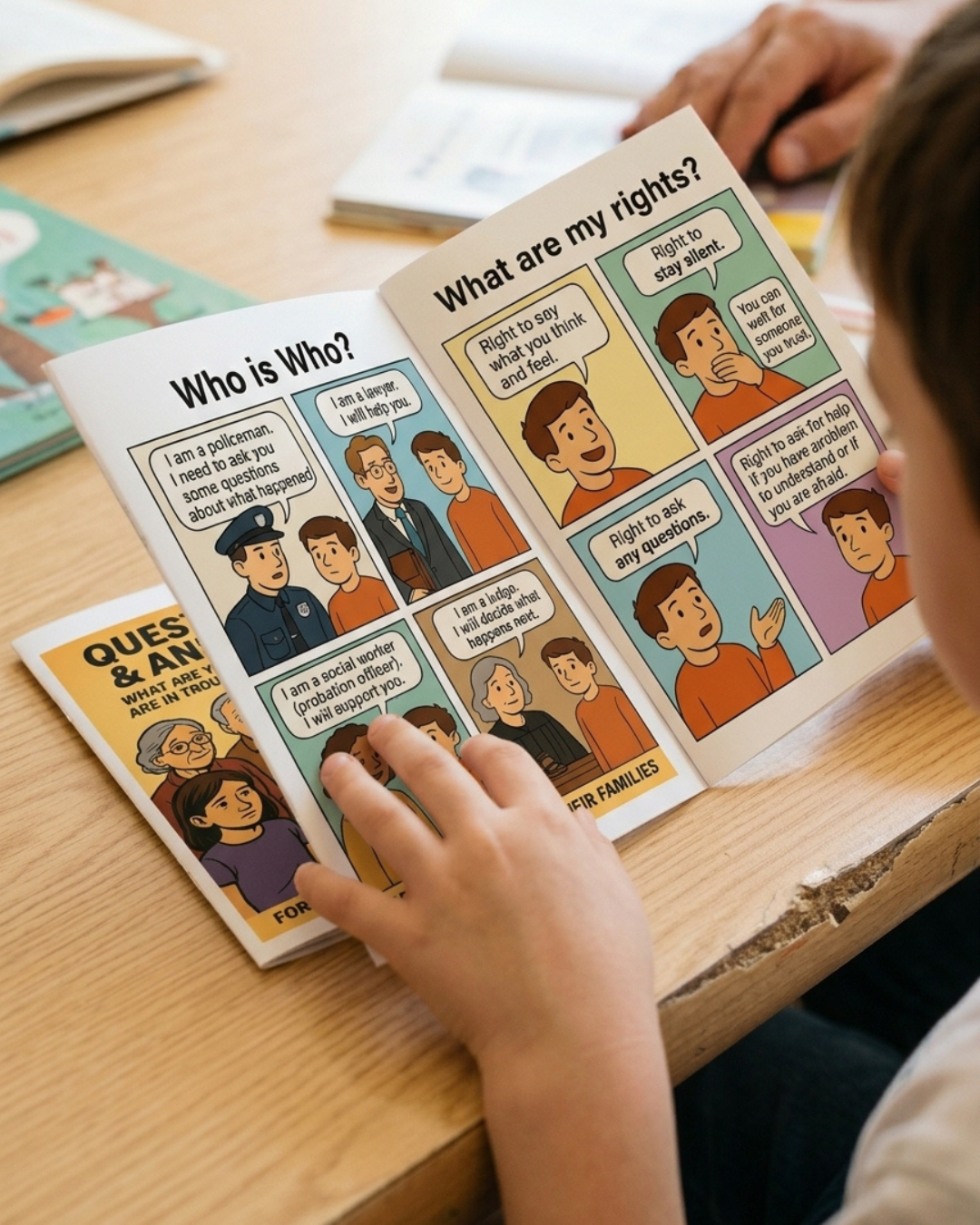
To help children, young people and their parents navigate criminal proceedings, the project produced a Frequently Asked Questions (FAQ) resource. It explains the rights of children who come into contact with the law – for example during questioning, detention, or court proceedings. The text answers the most common questions in clear, accessible language, helping young people better understand what is happening in their situation and what they are entitled to.
A joint model version was first developed in English (in an editable Word format as well as a visually designed “child-friendly” and “easy-to-read” version). Partners then prepared national versions adapted to the legal systems of Belgium, Bulgaria, Czechia, the Netherlands, Poland, and Slovakia.
Model version (template for partners): [Model FAQ – Word] | [Model FAQ – child-friendly version]
National materials for the Czech Republic and Slovakia:
- Leaflet: [Czech] | [Slovak] | [English translation]
- Brochure: [Czech] | [Slovak] | [English translation]


Versions for the other participating countries can be found here.
Project events
1. Transnational roundtable: Access to Justice for Children Accused or Suspected in Criminal Proceedings
🗓️ 18–19 March 2025 | Brussels
On 18 and 19 March 2025, the International Commission of Jurists (ICJ), together with us and other project partners, organized a transnational roundtable focused on access to justice for children accused or suspected in criminal proceedings. The event brought together judges, lawyers, public prosecutors, law enforcement officials, social workers and probation officers from Belgium, Bulgaria, the Czech Republic, the Netherlands, Poland and Slovakia.
On 18 March, the roundtable focused on cross-professional networking and discussion on cross- cutting issues, with the involvement of keynote speakers. On 19 March, participants were divided into separate workshops by professional group (lawyers, judges, prosecutors and law enforcement personnel, social workers and probation officers), and by national groups to discuss specific issues relevant to their professional focus area, and country of origin.
Discussions also focused on challenges in the practical implementation of Directive (EU) 2016/800, the gap between legal standards and their application in practice, and the need to strengthen a rights-based, child-friendly approach to justice. The outcomes of the roundtable informed follow-up workshops for individual professional groups and national seminars within the ACCESS project.
You can find the agenda and report of the event below.
2. Online workshops on access to justice for children in criminal proceedings
🗓️ April-May 2025 | Online
Following the Transnational Exchange Roundtable held in March 2025 in Brussels, the International Commission of Jurists (ICJ) and partners organized a series of specialized online workshops between April and May 2025. These workshops brought together legal practitioners, social workers, probation officers, and judges from six EU Member States (Belgium, Bulgaria, Czech Republic, Netherlands, Poland, and Slovakia) to examine persistent barriers to access to justice for children suspected or accused in criminal proceedings.
- Series of workshops with legal practitioners on access to lawyers
- Lawyers, judges, and prosecutors discussed practical challenges in ensuring effective legal representation for children, including building trust, ensuring confidential communication, and enabling meaningful participation of children in their defense. Complex procedural issues were also addressed, including the transfer of children to adult courts, waivers of the right to a lawyer, access to appeals, and the role of individual assessments in determining measures in the child’s best interests. Participants also shared innovative/good practices, such as holding lawyer-child meetings in neutral environments like schools when parental support is lacking. One participant emphasized: “Acting in the child’s best interests should be based on communication with the child, who, with the support of a lawyer, is often capable of identifying what is best for themselves.” The discussions highlighted the importance of youth specialisation, continuous training, and multidisciplinary cooperation, while also pointing to persistent challenges related to limited resources and weak professional incentives.
- Series of workshops with social workers and probation officers on support structures
- This workshop revealed urgent gaps in support systems for children in conflict with the law across Member States. Significant disparities in caseloads were identified: professionals in some countries handle up to nine times more cases than counterparts elsewhere, severely limiting individualized care. Many are expected to work with both adults and children without adequate preparation. A critical concern was lack of coordination among services. As one participant noted: “Children in conflict with the law often interact with multiple social workers throughout the proceedings, which often results in a loss of continuity and trust.” Participants raised concerns about systemic discrimination affecting marginalized children, particularly Roma children, and emphasized that assessments should be part of a participatory, rights-based process. The key takeaway: justice and social systems must recognize children in conflict with the law as young people in need of support and protection, not just punishment.
- Series of workshops with judges on individual assessments and alternatives to detention
- Workshops with judges focused on individual assessments and alternatives to detention. Judges strongly agreed that deprivation of liberty/detention must remain a measure of last resort. Belgium’s model was highlighted as good practice, where diversion and restorative justice are mandated by law and sentences undergo mandatory review every six months. However, concerns were raised that alternatives such as compulsory treatment or institutional placement can sometimes offer even fewer safeguards than detention, particularly with uncertain or indefinite durations. “There is a lack of consistent and meaningful individual assessments,” noted Viktoryia Konashava, Legal Researcher at the ICJ. A critical gap identified was the lack of mandatory specialized training for judges on child psychology, communication skills with children, and engaging with children with disabilities — undermining the capacity of courts to respond effectively to children’s needs.
All workshops underscored the urgent need for specialized and continuous training for all professionals involved, stronger interdisciplinary cooperation, structured individual assessments, adequate resources, and sustained investment in diversion and alternatives to detention. The discussions reinforced that improving access to justice for children in criminal proceedings requires justice systems that are genuinely child-centred, rights-based, and responsive to structural inequalities.
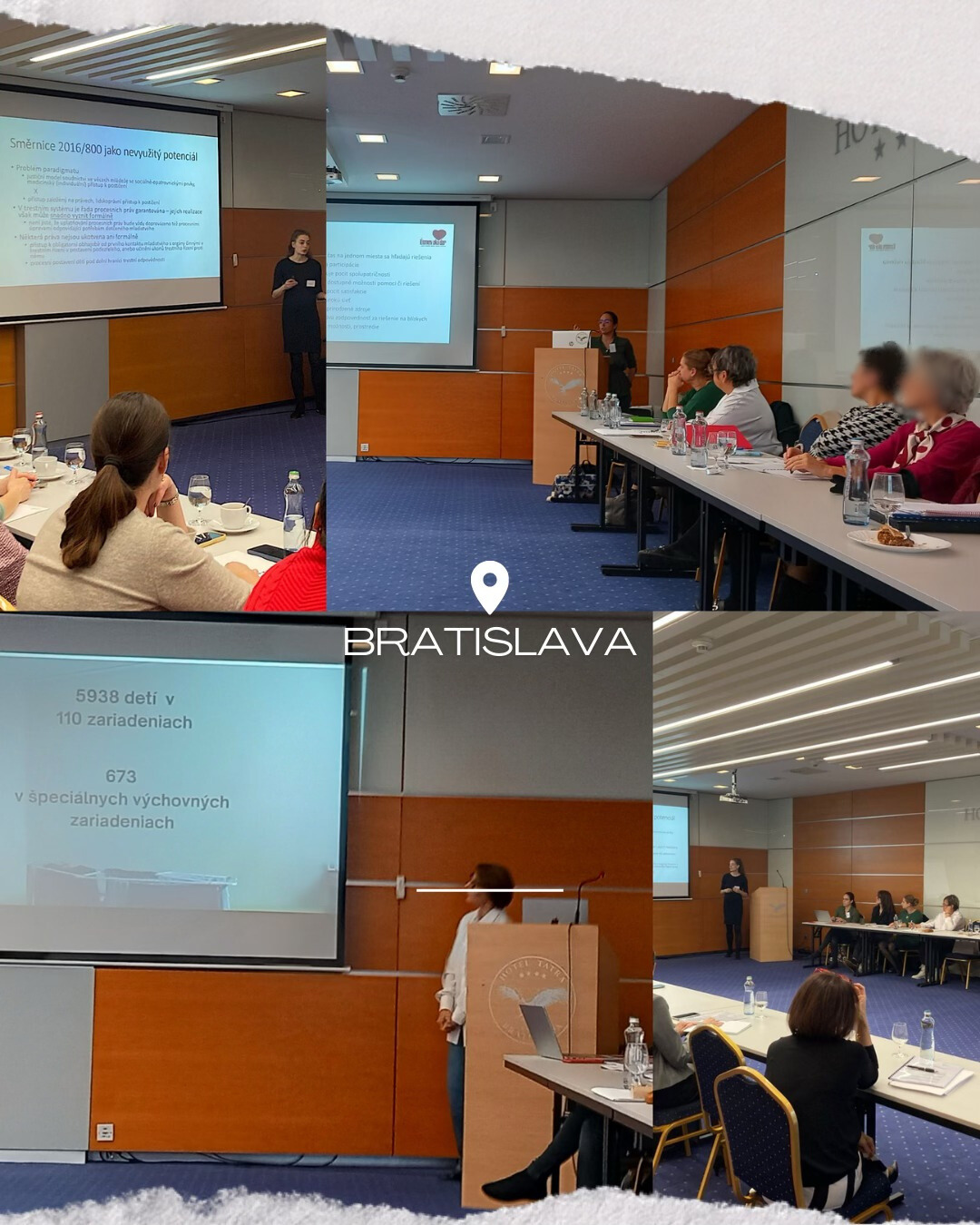
3. Expert seminars: Included through exclusion? How to ensure that traditional criminal justice safeguards also extend to children facing structural disadvantage?
🗓️ 4.11. 2025 | Bratislava; 🗓️ 12.11. 2025 | Prague
More information about the content of both expert seminars can be found here or in the seminar agendas and summary of baseline studies below.

4. Final event at the European Parliament
🗓️ 23 June 2026 | Brussels / European Parliament
On 23 June 2026, the International Commission of Jurists (ICJ), with the support of Members of the European Parliament, hosted the project’s closing policy event at the European Parliament. The conference convened EU policymakers, representatives from the European Commission and the European Parliament, a member of the UN Committee on the Rights of the Child, international experts, judges, lawyers, and project partners.
Key themes and conclusions:
- Systemic gaps: Participants highlighted persistent gaps between procedural safeguards on paper and their application in practice regarding the right to information, early legal assistance, individual assessments, and detention limits.
- Circumventing criminal proceedings: Particular attention was paid to the use of child protection or family law measures in cases of a criminal nature, which in practice can lead to a de facto deprivation of liberty with a lower level of procedural safeguards.
- Discrimination: Vulnerable children (from marginalized backgrounds, migrant children, or children facing poverty) face a significantly higher risk of having their rights violated within justice systems.
- The way forward: Improving children’s access to justice requires both legislative and societal reform, as well as long-term cooperation between EU institutions, national authorities, and civil society.
Project partners
- International Commission of Jurists (Belgium) – project coordinator
- Bulgarian Helsinki Committee Association (BHC) (Bulgaria)
- Helsinki Foundation for Human Rights (HFHR) (Poland)
- Défense des Enfants International (DEI Belgique) (Belgium)
- Nederlands Juristen Comite Voor Demensenrechten (NJCM) (the Netherlands)
Full name of the project
Access to Justice for Children Accused and Suspect in Criminal Proceedings JUST-2023-JACC-EJUSTICE

This project is co-funded by the European Union. Views and opinions expressed are, however, those of the author(s) only and do not necessarily reflect those of the European Union or the European Commission. Neither the European Union nor the granting authority can be held responsible for them.